Security Service Architecture for SOC Teams: How to Build Workflows That Actually Operate

A security service usually starts as a capacity problem. The SOC is short on analysts, the alert queue is growing, investigations take too long, and leadership wants a cleaner answer than hire five more people.
So the team buys a managed security service, builds an internal detection platform, or stitches together a hybrid model with SIEM, EDR, threat intelligence, ticketing, and a few automation scripts.
Teams think the problem is coverage. The real problem is operating design.
A security service that only moves alerts from one queue to another does not reduce risk. It creates a new coordination layer. The practical question is not whether a service can detect threats. The question is whether the service can convert signals into trusted decisions, assign ownership, preserve evidence, and improve every week without drowning operators.
Table of contents
- The security service problem is an operating model problem
- Security service models SOC teams actually use
- Architecture of a useful security service
- Signal quality is the service, not the dashboard
- Security service workflows from detection to response
- Data ownership, evidence, and auditability
- Common failure modes when teams buy a security service
- What works: security service design rules for 2026
- What fails: anti-patterns to avoid
- Where ThreatCrush fits in a security service architecture
The security service problem is an operating model problem
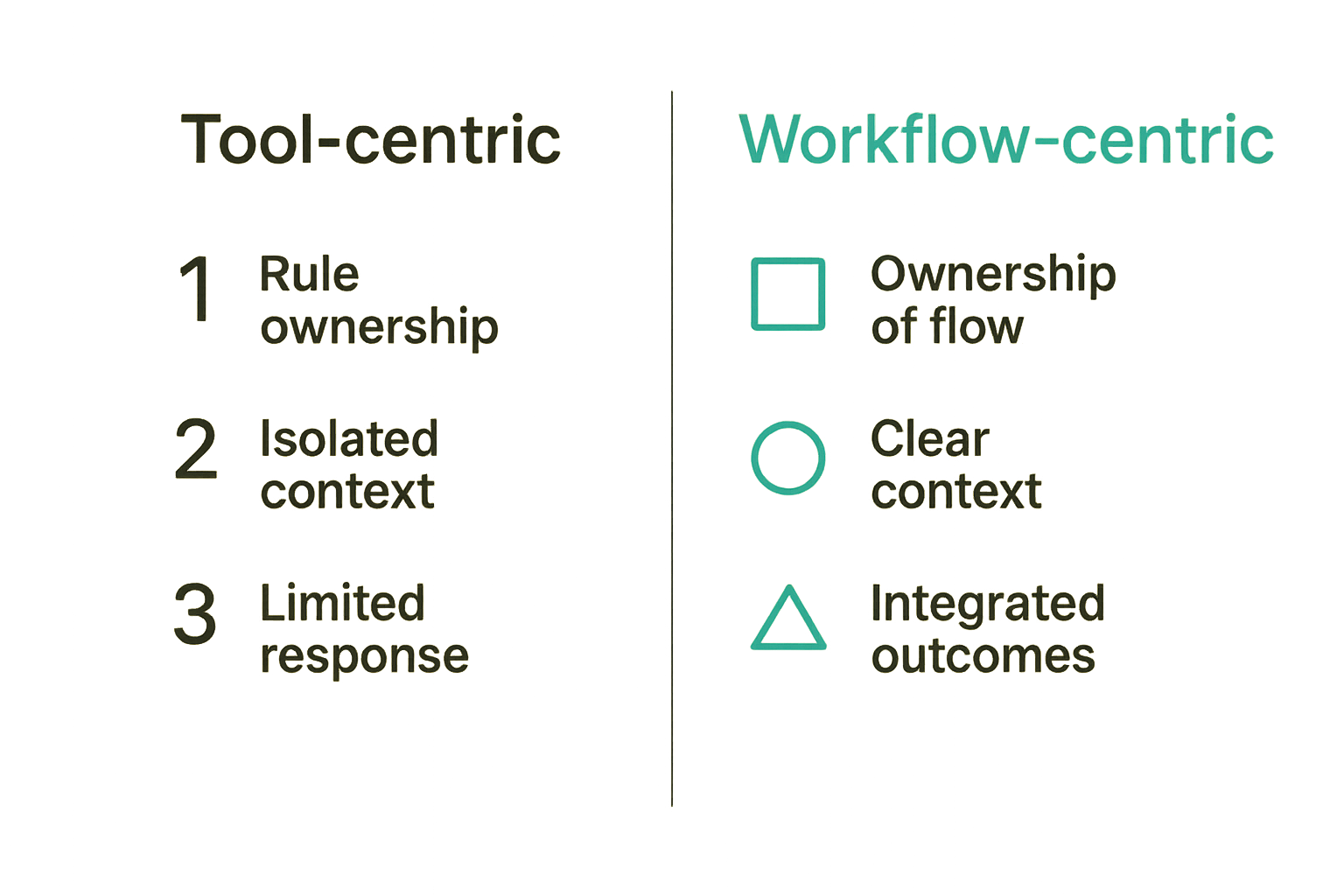
A useful security service is not a label for outsourcing. It is a repeatable way to collect security signals, make decisions, execute response, and learn from what happened. That can be delivered by an external provider, an internal SOC platform team, or a combination of both.
The mistake teams make is treating the service boundary as the vendor contract. In production, the real boundary is where context stops flowing.
Service boundaries beat tool boundaries
A SIEM rule is not a service. An EDR console is not a service. A managed detection provider is not automatically a service either.
A security service exists when the following are clear:
- What signals enter the workflow
- What enrichment happens before an analyst sees the case
- Who decides severity and confidence
- What response options are allowed
- Where evidence is stored
- How false positives and misses change future detections
That changes the conversation. Instead of asking whether the team has enough tools, you ask whether each workflow has a clean path from signal to outcome.
The practical owner is the workflow owner
Ownership gets messy fast. The detection engineer owns the rule. The SOC analyst owns triage. The incident responder owns containment. IT owns endpoint action. Legal owns notification. The external provider owns its queue.
If nobody owns the end-to-end workflow, the security service degrades into ticket routing.
Practical rule: assign ownership to the workflow, not just to the tool. A workflow without an owner becomes a backlog with dashboards.
The workflow owner does not need to execute every step. They need authority to change routing, tune detections, modify enrichment, remove dead automations, and escalate integration gaps.
What a SOC should expect from a security service
A SOC should expect more than alert forwarding. A mature service should provide:
- Clear detection scope and blind spots
- Repeatable triage logic
- Evidence quality sufficient for incident response
- Integration with case management and response systems
- Feedback loops for tuning and detection engineering
- Metrics that reflect risk reduction, not just activity
For a broader baseline on SOC operating components, the ThreatCrush guide to security operations in 2026 is useful context because it frames the SOC as workflows, architecture, and maturity rather than a room full of tools.
Security service models SOC teams actually use
The phrase security service covers several operating models. The right model depends on internal capability, asset complexity, regulatory pressure, and how much control the organization needs over detections and response.
Managed service, internal platform, or hybrid
Most teams land in one of three models:
- External managed service: a provider monitors, triages, and escalates.
- Internal security platform: the organization builds shared detection, enrichment, and response workflows.
- Hybrid service: external coverage handles parts of monitoring while internal teams own context, engineering, and response.
A useful way to think about it is control versus leverage. External services give leverage but reduce direct control. Internal platforms give control but require engineering capacity. Hybrid models work when the boundaries are explicit.
Related reading from our network: teams treating SOC capabilities like shipped products will recognize the same ownership problem in security operations product management.
Comparison table for common service models
| Model | What it is good at | What breaks in practice | Best fit |
|---|---|---|---|
| External managed security service | 24x7 monitoring, initial triage, surge capacity | Generic detections, weak business context, slow feedback | Small teams, global coverage needs, early SOC maturity |
| Internal SOC platform | Deep context, custom detections, direct response control | Engineering burden, maintenance debt, staffing gaps | Complex environments, regulated teams, mature SOCs |
| Hybrid service | Balance of coverage and control | Ambiguous ownership, duplicated triage, integration drift | Growing teams with some internal detection capability |
| Point solution service | Narrow capability such as phishing, MDR, cloud posture | Siloed evidence and separate queues | Specific high-volume use cases |
The table is not a maturity ladder. Many strong teams use hybrid models indefinitely. The key is not purity. The key is knowing what each service owns and how handoffs work.
Where outsourcing breaks
Outsourcing breaks when the provider cannot see the context required to make a decision.
Common examples:
- The provider sees endpoint telemetry but not identity risk.
- The provider sees cloud alerts but not asset criticality.
- The provider escalates suspicious activity without knowing maintenance windows.
- The provider cannot validate whether containment is safe.
This is not a provider failure by default. It is an architecture failure. If context is trapped in internal systems and never reaches the service layer, every escalation becomes a question for the customer.
Architecture of a useful security service
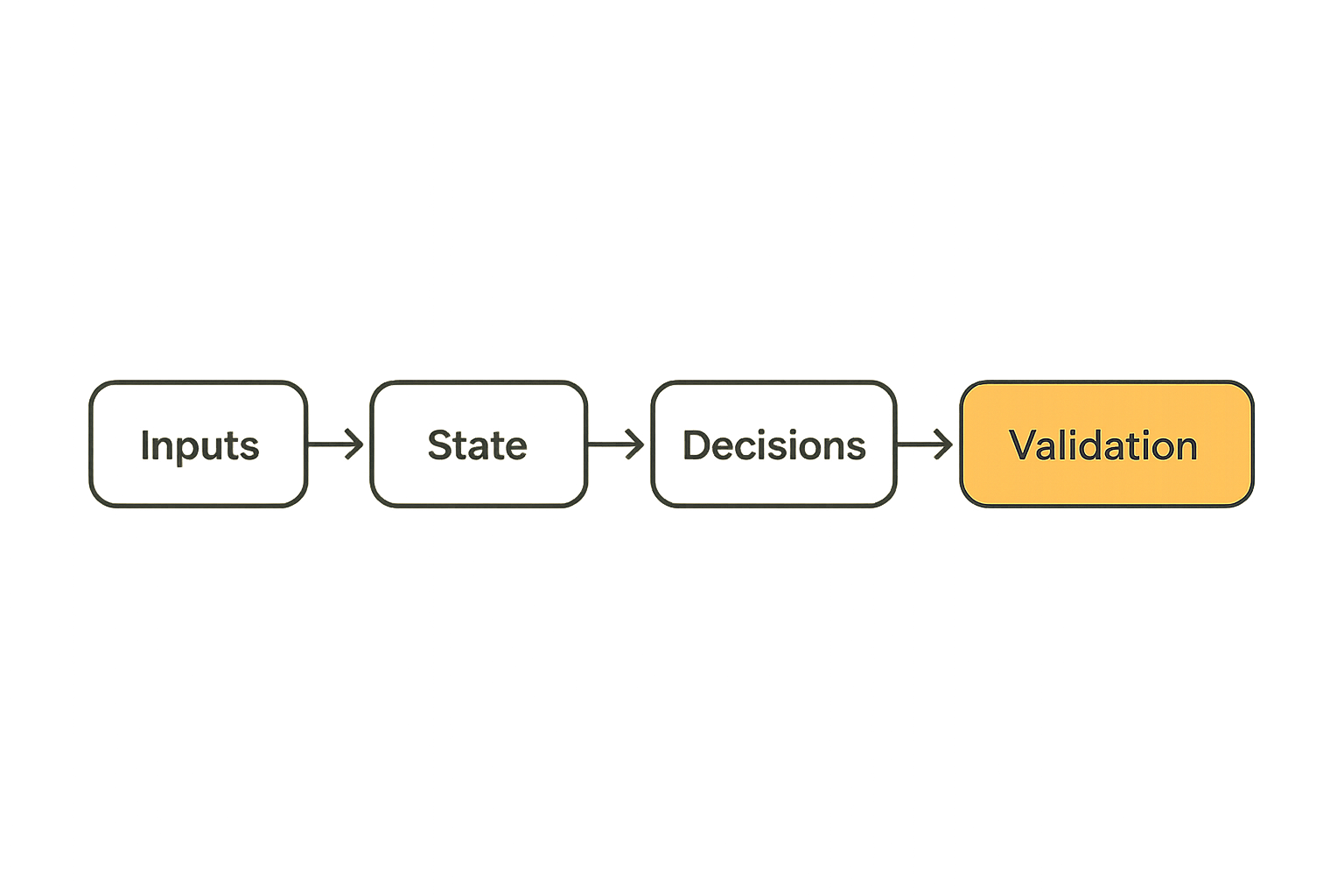
A security service should be designed like an operating workflow, not a subscription. At minimum, it needs inputs, state, decisions, actions, and validation.
Inputs, state, decisions, and actions
Every service can be mapped into four layers:
- Inputs: logs, endpoint events, network telemetry, vulnerability data, cloud events, identity signals, threat intelligence
- State: asset inventory, user context, case status, suppression rules, previous incidents, known exceptions
- Decisions: severity, confidence, escalation, containment eligibility, duplicate handling
- Actions: notify, enrich, isolate, block, open case, request approval, close as benign
What breaks in practice is the state layer. Teams connect data sources and response tools, but they do not maintain reliable service state. The result is repeated investigation of the same asset, duplicate tickets, and automations that cannot tell new risk from known noise.
Control-plane versus data-plane responsibilities
Borrow a networking idea: separate the control plane from the data plane.
The data plane is where events move. Logs are collected, detections fire, enrichments run, and alerts become cases.
The control plane decides how the service behaves. It defines routing rules, detection changes, risk scoring, escalation policies, response permissions, and suppression windows.
A clean security service architecture makes the control plane explicit. If control-plane decisions live in undocumented analyst habits, the service will not scale.
Minimum viable integration map
Before buying or building more capability, map the minimum viable integrations:
security_service:
  inputs:
    - endpoint_events
    - identity_events
    - cloud_control_plane_logs
    - threat_intelligence
    - vulnerability_context
  state:
    - asset_criticality
    - user_role
    - case_history
    - maintenance_windows
    - known_exceptions
  outputs:
    - case_management
    - chatops_notification
    - edr_response_action
    - firewall_or_proxy_block
    - detection_backlog_item
This does not need to be perfect. It needs to be visible. Once the map exists, gaps become engineering work instead of recurring analyst pain.
Signal quality is the service, not the dashboard
Dashboards are useful for visibility. They are a poor substitute for signal quality.
A security service succeeds when it improves the decision quality of the SOC. That means less duplicate noise, faster enrichment, clearer severity, and better routing.
Normalize before you automate
Automation fails when the inputs are inconsistent. If one tool calls a host endpoint_name, another calls it device, and a third calls it asset_id, your playbook will eventually route the wrong case or miss an enrichment.
Normalize the fields that drive decisions:
- Asset identifier
- User identifier
- Source and destination
- Detection name and category
- Severity and confidence
- Business criticality
- Time window
- Case identifier
Practical rule: never automate a decision path until the fields behind that decision are normalized and tested.
Normalization is not glamorous, but it is one of the highest-leverage service improvements a SOC can make.
Tune for decisions, not alerts
Many teams tune detections only by alert volume. That is incomplete. A detection that fires often may still be useful if it compresses investigation and routes cleanly. A low-volume detection may be harmful if every case requires three teams to interpret.
Tune around decision quality:
- Did the alert include enough evidence?
- Was severity accurate?
- Did the case route to the right owner?
- Was the response action clear?
- Did analysts repeatedly ask the same follow-up question?
For deeper workflow design around investigation paths, see the ThreatCrush guide on threat analysis workflows, which focuses on connecting enrichment, triage, and response instead of leaving analysis as a manual hunt.
Measure investigation compression
A useful metric is investigation compression: how much work the service removes before a human decides.
Do not invent a complicated formula at first. Track practical measures:
- Time from alert to enriched case
- Number of analyst clicks before confidence decision
- Number of systems opened per case
- Percentage of cases with asset and identity context attached
- Percentage of escalations accepted without rework
These metrics expose whether the service is making analysts faster or just giving them more screens.
Security service workflows from detection to response
A security service becomes real when the workflow survives production. That means retries, ownership, evidence, escalation, and failure handling.
A practical implementation sequence
Start with one high-value workflow. Do not try to service-enable every alert category at once.
- Pick a detection family with real business value, such as credential abuse, malware execution, suspicious cloud admin activity, or data exfiltration.
- Define the expected decision: benign, suspicious, incident, or needs owner review.
- Map required context: asset criticality, identity role, recent vulnerability exposure, external indicators, and historical case data.
- Build the enrichment path before analyst triage.
- Define escalation thresholds and response permissions.
- Test with historical cases and known false positives.
- Launch with a tuning window and daily review.
- Convert recurring analyst comments into backlog items.
This sequence turns the security service from a monitoring promise into an operating mechanism.
Handoff rules for analysts and responders
Handoffs need contracts. A responder should not receive a vague ticket that says suspicious PowerShell. They need evidence, confidence, business impact, and a proposed action.
A usable handoff includes:
- Summary of what happened
- Why the service believes it matters
- Affected asset and user
- Timeline of relevant events
- Supporting indicators and raw evidence links
- Recommended containment or next step
- Known uncertainties
Related reading from our network: payment and blockchain teams face similar trust-boundary issues when risk signals must drive operational holds, as discussed in threat intelligence blockchain architecture.
Automation that survives production
Automation should be boring. It should handle retries, idempotency, partial failure, and approval gates.
Good service automation has these properties:
- It can run twice without causing duplicate harm.
- It logs every input and output.
- It fails closed for destructive actions.
- It distinguishes enrichment failure from detection failure.
- It has a manual override path.
- It is owned by a named team.
If an automation cannot explain what it did, why it did it, and what evidence it used, it is not production-grade SOC automation. It is a demo.
Data ownership, evidence, and auditability
Security services are judged during incidents, audits, and postmortems. If evidence is missing or decisions cannot be reconstructed, trust collapses.
Keep raw evidence accessible
Do not rely only on summarized alerts. Summaries are useful for triage, but responders need access to the underlying evidence.
Keep links or copies for:
- Raw events
- Process trees
- Network sessions
- Identity authentication logs
- Cloud control-plane actions
- File hashes and command lines
- Enrichment results at the time of decision
Evidence should be accessible even if the external service dashboard is unavailable or the case has been closed.
Decide retention by use case
Retention is not one policy. Different use cases need different windows.
Detection tuning may need weeks of data. Incident response may need months. Regulatory investigations may need longer. High-volume telemetry may need tiered storage.
The mistake teams make is letting tool defaults decide retention. Service owners should define retention based on investigation and compliance requirements, then design storage accordingly.
Make every decision replayable
Replayability means the team can answer: given what the service knew at the time, why was this decision made?
Capture:
- Detection version
- Enrichment sources and timestamps
- Severity calculation
- Analyst notes
- Automation outputs
- Escalation decision
- Closure reason
Practical rule: if a security service cannot replay its decisions, it cannot reliably improve them.
Replayability is also how detection engineering gets better. You cannot tune what you cannot reconstruct.
Common failure modes when teams buy a security service
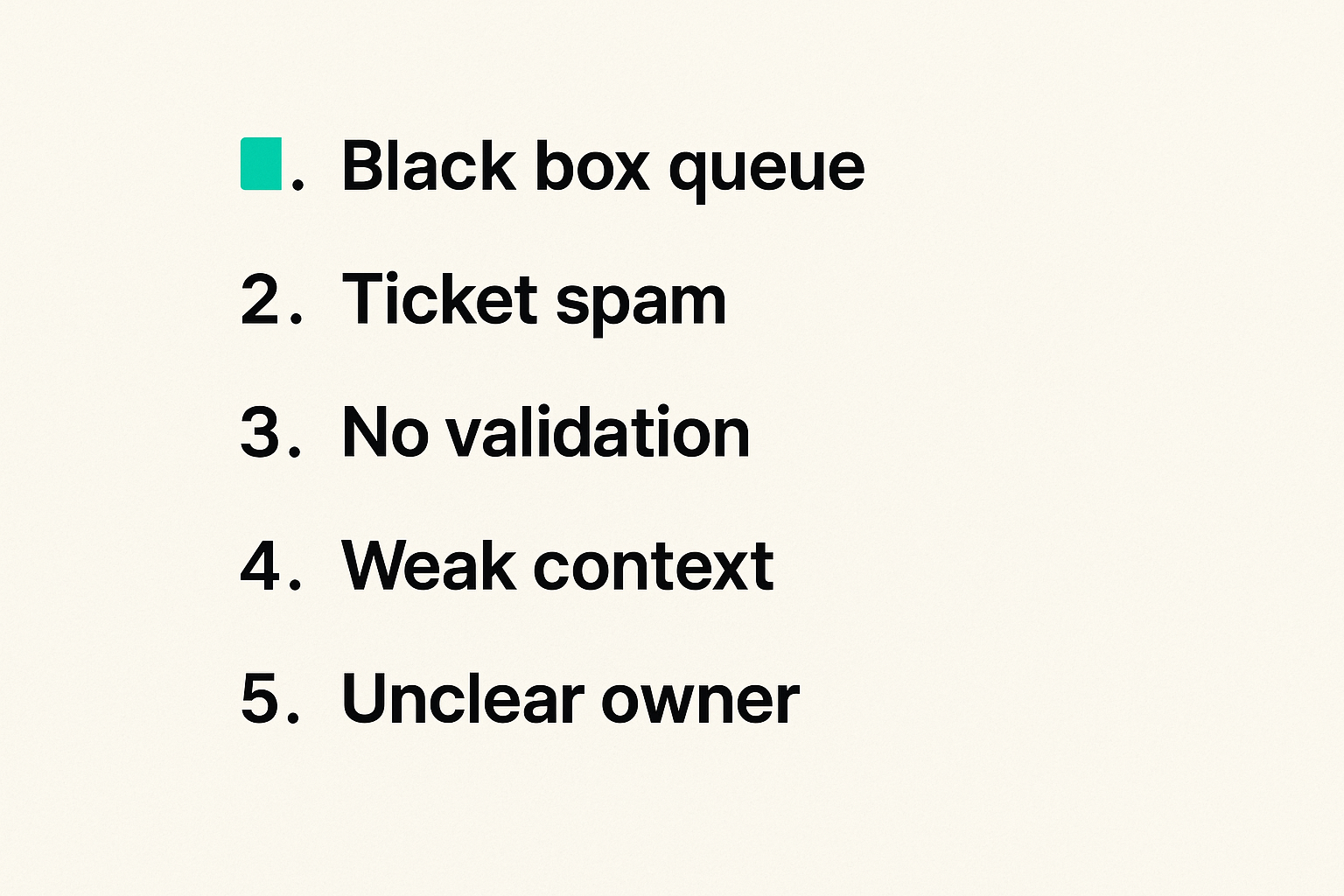
Most security service failures are predictable. They are not caused by lack of dashboards. They are caused by unclear ownership, weak context, and missing feedback loops.
Failure mode one: the black box queue
The black box queue happens when alerts enter an external or internal service and come back as escalations with little explanation.
Symptoms include:
- Analysts re-investigate every escalation.
- Responders distrust severity.
- False positives repeat for months.
- Detection logic is not visible.
- The provider or platform team cannot explain why a case routed.
The fix is transparency. Require evidence, decision logic, and tuning pathways. A service that refuses operational feedback will become shelfware with a support contract.
Failure mode two: ticket spam
Ticket spam is not alerting. It is operational denial of service.
It happens when every detection creates a case without deduplication, suppression, correlation, or ownership. Analysts then spend the day closing symptoms instead of investigating incidents.
Better service design groups related activity into cases, suppresses known maintenance, attaches context, and routes only actionable work.
Failure mode three: no validation loop
A security service without validation will drift. Threat behavior changes, business systems change, endpoint agents break, cloud accounts multiply, and detections age.
Validation should include:
- Scheduled detection reviews
- Purple-team or attack simulation results
- False positive and false negative analysis
- Coverage mapping to critical assets
- Post-incident detection gaps
Related reading from our network: even solo operators and consultants face the same workflow-versus-dashboard trap when using threat intelligence AI tools for client risk research.
What works: security service design rules for 2026
Security service design in 2026 needs to assume hybrid environments, mixed tooling, AI-assisted triage, and constant integration pressure. The basics still matter: ownership, signal quality, evidence, and response.
Define the service catalog
A service catalog sounds bureaucratic until the SOC grows. Then it becomes the map everyone needed six months earlier.
Define each service with:
- Name and purpose
- Data sources
- Detection scope
- Response options
- Service owner
- Escalation path
- Evidence requirements
- Success metrics
- Known limitations
Example:
service: credential_abuse_monitoring
owner: detection_engineering
primary_users:
  - soc_tier_2
  - incident_response
inputs:
  - identity_provider_logs
  - endpoint_login_events
  - vpn_logs
  - threat_intel_indicators
response_options:
  - force_password_reset
  - revoke_sessions
  - open_incident
limits:
  - no coverage for unmanaged personal devices
  - geo signals unreliable for traveling executives
The catalog keeps expectations honest. It also helps leadership understand what the SOC actually operates.
Create a change process for detections
Detection changes are production changes. Treat them that way.
A lightweight process is enough:
- Propose change with reason and expected impact.
- Test against historical data.
- Review with service owner and analyst lead.
- Deploy with versioning.
- Monitor volume, precision, and escalation quality.
- Roll back if the detection damages workflow quality.
This prevents silent changes from breaking downstream response.
Use metrics that operators trust
Metrics should help operators improve the service. Avoid vanity metrics such as total alerts reviewed unless they are tied to outcomes.
Better metrics include:
- Mean time to enriched case
- Escalation acceptance rate
- Repeat false positive rate
- Detection change lead time
- Percent of cases with complete evidence
- Response action success rate
- Misses discovered during postmortems
Metrics should trigger decisions. If nobody changes behavior based on a metric, remove it.
What fails: anti-patterns to avoid
Some patterns look mature from a distance and fail under operational load.
Buying coverage without integration
Coverage claims are easy to buy. Integrated coverage is hard to operate.
A provider may monitor endpoint, cloud, identity, and network sources, but if cases do not land in the SOC workflow with the right context, the service still creates work. Ask how findings move into your case system, how evidence is preserved, and how tuning requests are handled.
The practical question is not what the service can see in a demo. It is what your analysts receive at 2 a.m. when something looks real.
Treating threat intelligence as a feed dump
Threat intelligence is useful when it changes decisions. It is harmful when it becomes a bulk indicator import with no scoring, expiration, or context.
Good intelligence integration answers:
- Does this indicator relate to our exposed assets?
- Is the source credible for this use case?
- Has the indicator expired or changed meaning?
- Does it raise severity or only enrich context?
- Should it create a block, a hunt, or a watch condition?
Feed volume is not service quality. Operational relevance is.
Scaling by adding queues
When a workflow breaks, many teams add another queue: a triage queue, escalation queue, engineering queue, provider queue, or exception queue. Each queue adds waiting time and ambiguity.
Queues are sometimes necessary, but they should be treated as a cost. Before adding one, ask whether better enrichment, routing, ownership, or automation would remove the need.
A mature security service reduces queue depth by improving decisions earlier in the workflow.
Where ThreatCrush fits in a security service architecture
Threat intelligence, vulnerability context, and attack surface visibility are not the whole security service. They are decision inputs that make the service smarter when they are integrated into detection and response workflows.
Use threat intelligence as operational context
ThreatCrush is useful in a security service architecture when teams need real-time threat feeds, vulnerability tracking, attack surface monitoring, and threat actor context to support SOC decisions.
The architectural fit is straightforward:
- Enrich detections with external threat context.
- Prioritize vulnerabilities based on active exploitation and exposure.
- Help analysts understand whether an indicator is commodity noise or part of a relevant campaign.
- Feed detection engineering with current adversary infrastructure and behavior.
- Support proactive hunting and reactive investigation from the same context layer.
This is where threat intelligence stops being a separate portal and becomes service context.
When ThreatCrush is not the whole service
ThreatCrush should not replace your case management, incident command process, endpoint response tooling, or detection ownership model. No intelligence platform should.
A useful product fit is narrower and stronger: provide the context layer that helps a SOC decide what matters, why it matters, and where to act first. Your security service still needs workflow design, response authority, evidence handling, and tuning discipline.
That changes the conversation from buy another dashboard to improve the service architecture.
Try threatcrush.com
ThreatCrush is for security operations professionals building and scaling SOC capabilities. If your security service needs better threat context, vulnerability awareness, and attack surface visibility, Try threatcrush.com.
Try ThreatCrush
Real-time threat intelligence, CTEM, and exposure management — built for security teams that move fast.
Get started →