National Security Agency Definition for SOC Teams: Turning a Term Into an Operating Model

A national security agency definition sounds like a glossary problem until your SOC receives a government advisory, a law-enforcement request, or a threat intelligence feed marked with handling restrictions.
Then the definition becomes operational. Who can consume the signal? Which systems can store it? Does it change incident severity? Who owns the escalation? What can your analysts share with vendors, customers, or peer organizations?
Teams think the problem is defining a national security agency. The real problem is building a workflow that can ingest national-security context without breaking detection quality, legal boundaries, or response speed.
That changes the conversation. For SOC engineers, detection engineers, and incident responders, the practical question is not whether a national security agency is a defense, intelligence, law-enforcement, or cyber authority. The practical question is how that agency's signals enter your operating model and what happens next.
Table of contents
- A national security agency definition for SOC operators
- Map the agency role to your security workflow
- Signals that usually come from national security agencies
- Build an intake model that preserves context
- Translate agency intelligence into detections
- Ownership and escalation are the real control plane
- Where a national security agency definition breaks in practice
- What works in production SOCs
- What fails and how to fix it
- Product fit for threatcrush.com
A national security agency definition for SOC operators
The working definition
A national security agency is a government organization responsible for protecting a country's security interests. Depending on the country, that may include foreign intelligence, counterintelligence, cyber defense, signals intelligence, military support, law-enforcement coordination, critical infrastructure protection, or national-level threat response.
For a SOC, that definition is not enough. A useful way to think about it is this:
Practical rule: Treat a national security agency as a high-context signal source with authority, restrictions, and response implications. Do not treat it as just another threat feed.
The agency may publish open advisories, share restricted intelligence, request coordination, or provide guidance during a national-level cyber incident. Each case has a different workflow. An open advisory might become a detection engineering task. A restricted report might stay inside a smaller analyst group. A direct request might require legal, executive, and incident commander involvement.
The mistake teams make is collapsing all of those into one bucket called threat intel. That removes the very context that made the signal valuable.
Why SOC teams should care
National-security signals often arrive when the environment is already noisy: active exploitation, geopolitical tension, a critical vulnerability, attacks against a sector, or campaigns targeting infrastructure similar to yours. The SOC is expected to respond quickly, but the signal may be incomplete, sensitive, or not directly mapped to your telemetry.
This is where security operations discipline matters. If your team already has mature alert triage, detection engineering, case management, and response ownership, agency intelligence becomes another input into the operating system. If your workflow is informal, it becomes a Slack storm.
Many teams maintain general security operations guidance, but the handoff between intelligence, detection, and response is where the real work lives. If you need the broader operating context, our guide to security operations in 2026 covers the SOC architecture and workflow foundation this article assumes.
The architecture implication
The architecture implication is simple: source authority must travel with the signal.
If an advisory says a threat actor is exploiting edge devices, the SOC needs more than a PDF. It needs structured fields: source, confidence, handling, affected technologies, behaviors, indicators, detection hypotheses, owner, review date, and escalation path.
Without that structure, analysts copy indicators into blocklists, detection engineers create brittle rules, and incident responders ask why the case was escalated. What breaks in practice is not the definition. It is the loss of operational context between intake and action.
Map the agency role to your security workflow
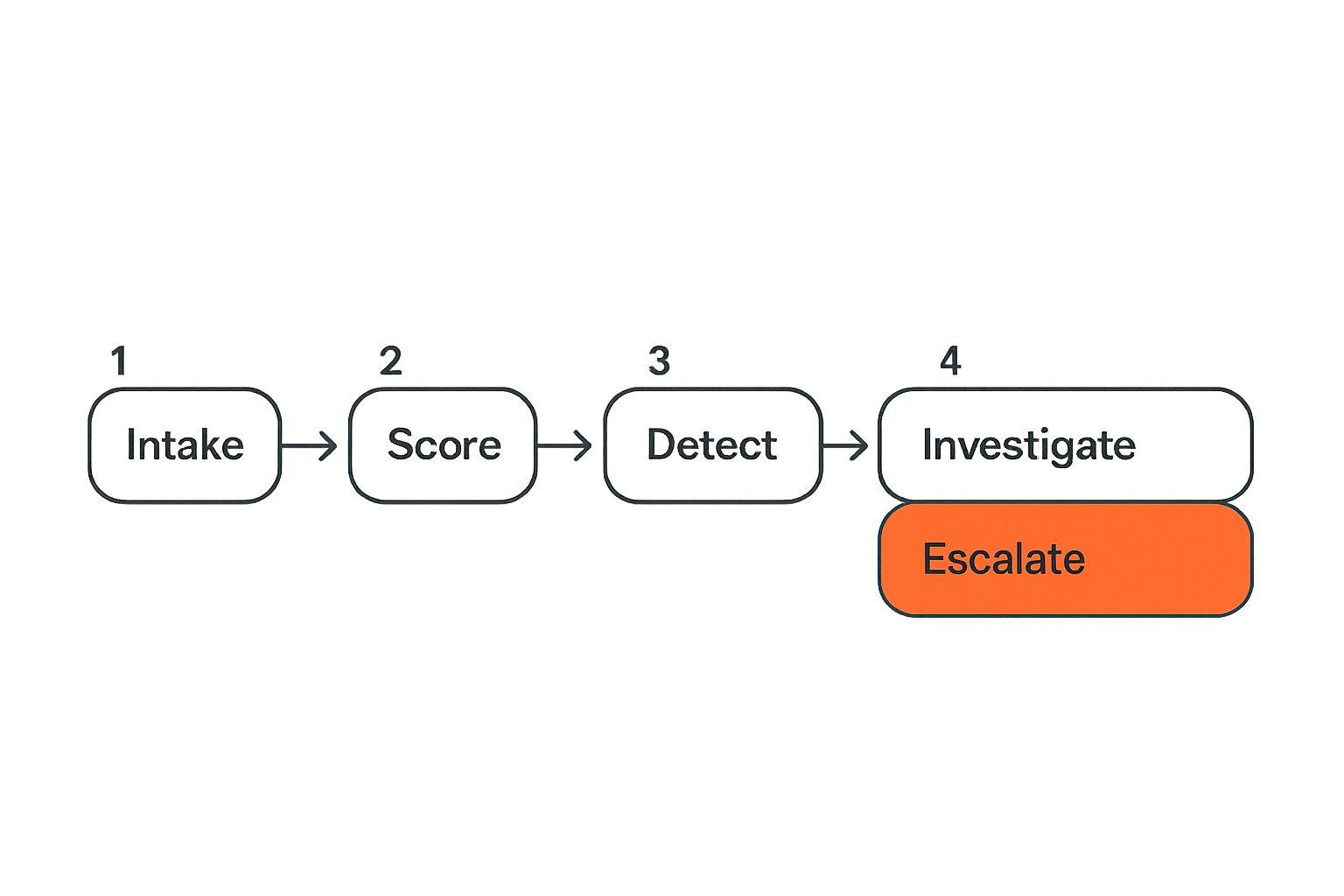
Advisory source
The most common interaction is the public advisory: a bulletin about a vulnerability, campaign, tactic, malware family, or sector risk. Public advisories are useful because they are shareable and easy to route. They are also easy to misuse.
An advisory is not automatically an incident. It is a trigger for assessment. Your SOC should ask:
- Do we run the affected technology?
- Do we have exposure on internet-facing assets?
- Do we have telemetry that can observe the described behavior?
- Do current detections cover the technique?
- Is there evidence of activity in our environment?
If the answer is unknown, the first task is asset and telemetry validation, not alert creation.
Intelligence producer
Some agencies produce intelligence that includes indicators, infrastructure, malware analysis, observed procedures, or actor attribution. The value is not only in the indicator list. The value is the context around why those indicators matter.
Indicator-only ingestion creates false confidence. Domains expire. IPs rotate. Hashes age quickly. The better pattern is to use agency intelligence as a detection seed and enrichment source.
For example, a report describing credential theft from VPN appliances should produce several work items: review external attack surface, verify patch status, hunt authentication anomalies, tune detections for impossible travel or abnormal session creation, and enrich any matching alerts with the source report.
Related reading from our network: cloud teams face similar ownership problems when identity signals cross build systems and runtime environments, which is why this practical guide to identity and access management for cloud security is a useful adjacent read.
Escalation counterpart
In some incidents, a national security agency may be an escalation counterpart. That does not mean every analyst should contact them. It means your organization needs a predefined path.
The path should include incident command, legal counsel, executive sponsor, communications, and any sector-specific regulatory function. The SOC can provide facts and evidence. It should not improvise national-level coordination during an active incident.
Practical rule: Decide the agency contact path before you need it. During an incident, the SOC should execute the escalation model, not design it.
Signals that usually come from national security agencies
Threat advisories and bulletins
Advisories are narrative-heavy. They describe risk, affected systems, indicators, tactics, and mitigation steps. The best SOCs convert them into structured questions.
A good advisory intake record includes:
- Advisory title and source
- Publication date and last updated date
- Affected products, sectors, and regions
- Known exploited status if stated
- Techniques or behaviors described
- Indicators with confidence and age
- Recommended mitigations
- Internal owner and due date
This lets you avoid the common pattern where three people read the same advisory and create three disconnected tasks.
Indicators and behavioral intelligence
Indicators are useful, but behavior is more durable. A single IP address may be low value after a few days. A described pattern such as web shell deployment after appliance exploitation, new admin user creation, abnormal outbound tunneling, and credential harvesting is more useful for detection engineering.
The practical question is whether your telemetry can observe the behavior. If the report describes process creation on an appliance you cannot instrument, you may need network detection, authentication logs, configuration review, or vendor telemetry instead.
A national security agency definition for SOC purposes should therefore include source capability. Some agencies can see infrastructure at national scale. Some can produce malware analysis. Some coordinate victim notifications. Your workflow should preserve which type of visibility produced the signal.
Vulnerability and infrastructure warnings
Agency warnings often focus on exploited vulnerabilities and critical infrastructure exposure. These signals sit between vulnerability management, attack surface management, and SOC detection.
The mistake teams make is routing vulnerability warnings only to patch management. If exploitation is active or likely, the SOC also needs to hunt for evidence, monitor exploit attempts, review compensating controls, and watch for post-exploitation behavior.
This is where continuous threat exposure management and SOC operations should connect. Exposure without detection creates blind spots. Detection without exposure context creates noise.
Build an intake model that preserves context
Normalize source metadata
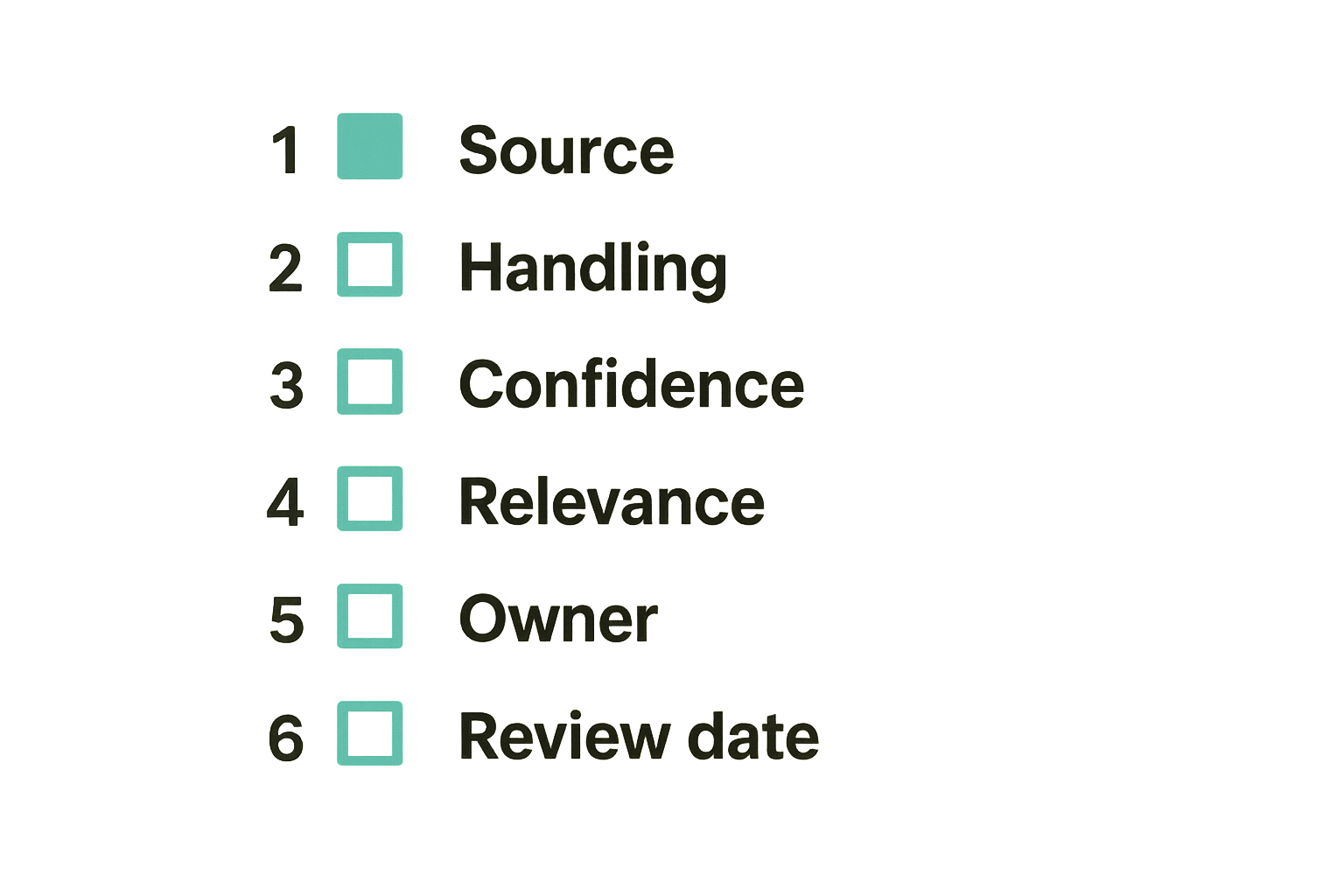
Your intake model should make source context queryable. At minimum, store:
| Field | Why it matters | Example value |
|---|---|---|
| Source organization | Establishes authority and provenance | National cyber authority |
| Source type | Helps route the signal | Advisory, restricted report, notification |
| Handling | Controls sharing and storage | Public, limited, legal review |
| Confidence | Prevents overreaction | High, medium, unknown |
| Relevance | Ties signal to your environment | Affected product present |
| Action owner | Prevents orphaned tasks | Detection engineering |
| Review date | Forces expiry and reassessment | 14 days after intake |
This table looks basic. In production, it prevents most of the avoidable mess. If you cannot query all high-confidence agency advisories affecting externally exposed systems, you do not have an intake model. You have documents.
Tag handling restrictions early
Handling rules must be captured before the signal enters broad tooling. If a report has sharing limits, you do not want it copied into a public ticket, pasted into a vendor portal, or stored in a system with too many readers.
This is not only a compliance concern. It is an operational integrity concern. Analysts need to know what they can reference when writing detections, briefing leadership, or asking vendors for support.
Practical rule: Apply handling labels at intake, not after enrichment. Once sensitive context is copied into uncontrolled systems, cleanup becomes unreliable.
Separate enrichment from alerting
Do not connect every agency indicator directly to alert generation. Use separate stages:
- Ingest and normalize the source.
- Enrich against assets, vulnerabilities, identities, and telemetry coverage.
- Score relevance to your environment.
- Decide whether to hunt, detect, block, monitor, or ignore.
- Track the decision and revisit it when the source updates.
This separation keeps your alert queue from becoming a dumping ground for unvalidated indicators. It also gives detection engineers room to build durable coverage instead of fragile match rules.
Translate agency intelligence into detections
Do not alert on every indicator
An indicator can support detection, enrichment, blocking, or investigation. Those are different actions.
| Input type | Bad default | Better use |
|---|---|---|
| Old IP list | Create high-severity alerts | Enrich historical searches and low-confidence matches |
| Malware hash | Alert forever | Use for retro hunt and expire unless still active |
| TTP narrative | Leave in PDF | Convert to detection hypotheses |
| Exploited CVE | Send to patch team only | Combine exposure check, hunt, and detection review |
| Victim notification | Open generic ticket | Escalate through incident command with evidence plan |
The better use depends on freshness, confidence, observability, and business impact. A national-security source may increase priority, but it does not remove the need for validation.
Turn narrative into hypotheses
Detection engineering starts with a hypothesis. If the advisory says actors exploit a firewall and then create local accounts, your hypothesis might be: exposed firewall devices show administrative account changes followed by outbound connections to unusual destinations.
That hypothesis maps to data sources:
- Asset inventory for exposed firewalls
- Configuration logs for account changes
- Network telemetry for outbound sessions
- Identity logs for new privileged access
- EDR or appliance telemetry where available
Then you decide what detection logic is realistic. Maybe the firewall does not emit process logs. Maybe network telemetry is the only reliable source. Maybe the best first move is a hunt query, not a production alert.
This is the same discipline used in strong threat analysis workflows. The source is important, but the workflow is what turns source context into action; the adjacent guide on threat analysis workflows goes deeper on connecting those steps.
Validate before production
Validation should answer three questions:
- Does the logic detect the described behavior?
- Does it produce tolerable noise in your environment?
- Does the alert include enough context for triage?
If you cannot answer those, keep it as a hunt, dashboard, or enrichment tag until you can. Production detections that analysts cannot interpret are just deferred engineering work.
A useful validation checklist:
- Test against known benign activity.
- Backtest against recent logs.
- Confirm required fields exist across major environments.
- Attach source reference and handling label.
- Define expiry or review criteria.
- Write analyst guidance before enabling paging.
Ownership and escalation are the real control plane
Define who can act
Ownership is where policy becomes operational. If an agency advisory affects an exposed product, who owns the first response? Vulnerability management may own patching. SOC may own hunting. Infrastructure may own mitigation. Legal may own external coordination.
If nobody owns the first move, the advisory becomes background noise. If everyone owns it, the response fragments.
Use a simple RACI-style model for national-security signals:
- Intake owner: receives and classifies the signal.
- Technical owner: assesses exposure and telemetry.
- Detection owner: builds or validates coverage.
- Incident owner: escalates if evidence exists.
- Communications owner: manages external or executive messaging.
Define who can share
Sharing is not a soft issue. It affects vendors, customers, peer groups, regulators, insurers, and law enforcement. Some national-security information is public. Some is restricted. Some is sensitive because it identifies victims, infrastructure, or investigative details.
Your workflow should make sharing decisions explicit. Analysts should not need to guess whether a screenshot, indicator, or report excerpt can be pasted into a vendor ticket.
Related reading from our network: teams outside security run into the same routing and trust problem when coordinating local networks; this piece on united community operations is a useful analogy for asks, offers, trust, and follow-up.
Define who can close
Closure criteria matter. An agency advisory is not closed because someone read it. A detection task is not closed because a rule was written. A vulnerability warning is not closed because a ticket was assigned.
Define closure based on evidence:
- Exposure assessed.
- Existing telemetry reviewed.
- Detections validated or documented as not feasible.
- Hunt completed if warranted.
- Mitigation status recorded.
- Handling requirements followed.
- Review date scheduled.
This keeps national-security context from becoming performative work.
Where a national security agency definition breaks in practice
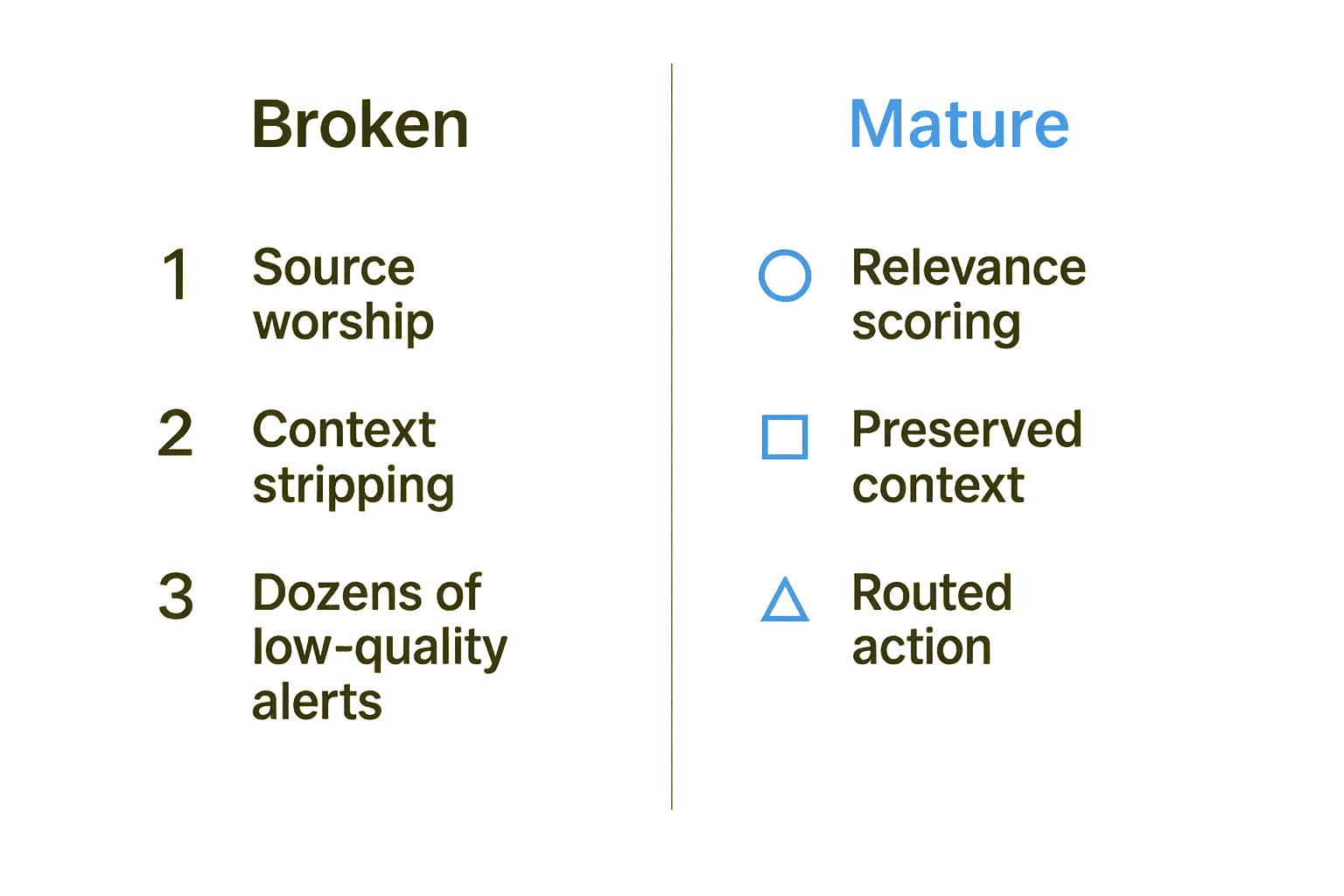
Failure mode one source worship
Source worship happens when the team treats anything from a national security agency as automatically urgent, correct, and actionable. The source may be authoritative, but your environment still determines relevance.
The failure looks like this: an advisory arrives, leadership asks if you are protected, analysts dump indicators into the SIEM, and dozens of low-quality alerts fire. Nobody can explain whether the affected technology exists internally.
The fix is not skepticism for its own sake. The fix is relevance scoring. Authority should increase attention. It should not bypass assessment.
Failure mode two context stripping
Context stripping happens when the report is reduced to IPs, hashes, and CVEs. The SOC loses source, campaign, behavior, confidence, handling, and recommended action.
This is especially damaging when a report contains strategic context. If the agency says a sector is being targeted through managed service providers, the detection task is not only about the listed indicators. It is about third-party access, remote management tools, privileged sessions, and lateral movement.
What breaks in practice is investigation quality. Analysts see an alert with a domain match but no explanation of why it matters. They close it as benign or escalate it without evidence.
Failure mode three unmanaged escalation
Unmanaged escalation happens when national-security language triggers panic. Executives get partial updates. Legal hears about it late. Incident responders chase hypothetical compromise. Detection engineers stop planned work to build rules nobody will use.
The fix is a severity gate. National-security source can be a priority modifier. It should not be the only severity driver. Severity should consider evidence of compromise, exposure, exploitability, business criticality, and ability to observe the threat.
Practical rule: Use national-security source as a priority input, not a severity substitute. Evidence still decides incident level.
What works in production SOCs
A useful implementation sequence
A practical implementation does not require a new bureaucracy. It requires a repeatable path from signal to action.
- Create a national-security signal intake queue with source, handling, and owner fields.
- Define accepted source types: public advisory, restricted report, direct notification, sector alert, law-enforcement contact.
- Build a relevance scoring model using assets, exposure, vulnerability status, identities, telemetry, and business function.
- Route work by action type: hunt, detection, block, patch, monitor, escalate, or document no action.
- Require detection hypotheses for narrative intelligence before production rules are written.
- Attach handling labels to cases, detections, and enrichment objects.
- Review open items on a fixed cadence until mitigated, expired, or superseded.
- Feed lessons learned back into playbooks and detection coverage.
This sequence is intentionally boring. Boring is good. It means the SOC can handle serious signals without turning every advisory into a custom project.
Controls that reduce analyst confusion
Controls should help analysts make faster decisions. Good controls include:
- Standard source labels in the SIEM or case platform.
- Expiry dates for indicators and temporary detections.
- Playbooks for agency advisories and victim notifications.
- Preapproved language for internal status updates.
- Escalation paths for legal and executive involvement.
- Detection guidance that explains the behavior, not just the rule.
Analysts do not need more tabs. They need fewer ambiguous decisions.
Metrics that actually help
Avoid vanity metrics such as number of advisories consumed. Consumption does not mean coverage.
Better metrics include:
- Time from advisory intake to relevance decision.
- Percentage of high-relevance advisories mapped to detections or hunts.
- Percentage of agency indicators with expiry dates.
- Number of alerts enriched with source context.
- False positive rate for agency-derived detections.
- Time from evidence found to incident escalation.
Metrics should expose workflow latency and decision quality. If a metric only proves that the team is busy, it is not useful.
What fails and how to fix it
Bad pattern one treating advisories as tickets
A ticket says do something. An advisory says assess something. When teams convert every advisory into a generic ticket, the work becomes vague and noisy.
What fails:
- No structured relevance assessment.
- No link to affected assets.
- No detection hypothesis.
- No closure criteria.
- No expiry.
What works:
- Intake record first.
- Relevance score second.
- Action ticket only after the decision.
This preserves the difference between information and work.
Bad pattern two mixing policy with detection logic
Detection logic should identify behavior. Policy should decide who sees it, how it is escalated, and what handling rules apply. When teams mix them, rules become hard to maintain.
Example of the bad pattern: a rule name includes the source agency, severity, handling label, campaign name, and response instruction. Six weeks later, the campaign changes, the indicators expire, and nobody knows whether the rule still detects anything.
Better pattern:
- Detection rule describes observable behavior.
- Metadata links to source and campaign.
- Case workflow applies severity and handling.
- Review process decides whether to keep, tune, or retire.
This makes detections portable and governance manageable.
Bad pattern three no feedback loop
The SOC should tell itself what happened after action was taken. Did the advisory produce useful detections? Were assets actually affected? Did the hunt find anything? Did analysts understand the context? Did the agency update the guidance?
Without a feedback loop, every new advisory starts from zero.
Related reading from our network: operations teams in finance and SaaS face a similar reconciliation problem, and this guide to invoicing software workflows is a useful non-security comparison for state, ownership, controls, and month-end cleanup.
For SOCs, the equivalent cleanup is post-action review. Keep it lightweight:
- What signal arrived?
- What did we decide?
- What action did we take?
- What evidence did we find?
- What detection or playbook changed?
- What should expire?
Product fit for threatcrush.com
Where a platform should sit
A threat intelligence or CTEM platform should sit between raw external signals and internal security action. It should not replace analyst judgment, incident command, or detection engineering. It should make those functions faster and less error-prone.
For national-security signals, the useful platform role is to preserve context, connect the signal to assets and exposures, enrich investigations, and help teams decide whether to hunt, detect, patch, block, or escalate.
That means the platform needs to support operational context, not just feeds. Source metadata, confidence, handling, asset relevance, vulnerability state, actor context, detection links, and review dates matter more than another long list of indicators.
What to automate and what to keep human
Automate the repetitive parts:
- Source ingestion and normalization.
- Indicator enrichment.
- Asset and exposure matching.
- Deduplication across advisories.
- Expiry reminders.
- Case enrichment.
- Routing based on predefined rules.
Keep humans in the decision points:
- Whether intelligence is relevant.
- Whether a detection should page analysts.
- Whether to escalate externally.
- Whether handling rules allow sharing.
- Whether evidence supports incident declaration.
The national security agency definition matters in the closing workflow because it tells the SOC what kind of authority, restriction, and responsibility may be attached to a signal. But the operating model decides whether that signal improves security or adds noise.
Try threatcrush.com
ThreatCrush is for security operations professionals building and scaling SOC capabilities, with real-time threat intelligence, vulnerability tracking, attack surface monitoring, and threat actor context in one workflow. Try threatcrush.com.
Try ThreatCrush
Real-time threat intelligence, CTEM, and exposure management — built for security teams that move fast.
Get started →